The Society of Critical Care Medicine’s (SCCM) 2027 Critical Care Congress will highlight the latest breakthroughs and help Congress attendees to gain fresh perspectives on how to elevate patient care. Attendees will benefit from sessions on topics such as resuscitation, pragmatic trials, transforming bedside observations into action, crisis and triage, and the impact of television medical dramas on critical care.
Buying Time: Reimagining Resuscitation from CPR to Emergency Preservation
Sunday, March 14, 2027 | 8:40 a.m. – 9:00 a.m.
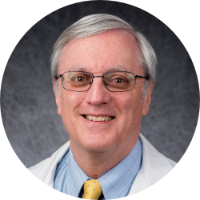 |
Samuel A. Tisherman, MD, FACS, FCCM
Peter Safar Honorary Lecture
Professor, Program in Trauma and Department of Surgery
University of Maryland School of Medicine
Baltimore, Maryland, USA
|
Eighty percent of soldiers killed in action during the Vietnam War without brain trauma had penetrating injuries to their torso. Autopsies revealed that many of those soldiers had technically repairable injuries, but they died due to a rapid loss of blood.
1
Years later, Colonel Ronald Bellamy and Peter Safar, MD, MCCM, recommended a new approach called emergency preservation and resuscitation (EPR) that could help patients who potentially face a rapid decrease in blood. By using hypothermia to decrease the body's need for oxygen flow, EPR couldallow critical care professionals more time to save the patient.
1
"Since the most important goal with resuscitation is to restore blood flow as fast as possible, a number of interventions have moved from the emergency department to the field," said Dr. Tisherman. "In the past, many clinical trials related to cardiac arrest or trauma focused on the deleterious chemical cascades that cause organ system failure. These studies usually did not show benefit. In contrast, technology to facilitate more interventions in the field or more quickly restore blood flow have more readily shown promise."
Dr. Tisherman will explore the evolution of resuscitation science, from foundational principles of cardiopulmonary resuscitation and physiologic rescue to contemporary advances in trauma resuscitation, hypothermia, emergency preservation, and future directions in critical care. Using lessons learned from decades of translational science and clinical investigation, this session will examine how novel approaches to preserving physiology during severe injury and circulatory collapse may reshape the future of critical care.
"The most important goal with resuscitation is to restore normal blood flow to vital organs before significant damage is done," Dr. Tisherman said. "There are times, such as when someone has lost so much blood that the heart stops, that buying time for transfusing blood and stopping the bleeding by using an intervention, such as hypothermia, to decrease the body’s need for oxygen could save a life."
Initiating hypothermia in a patient directly decreases their metabolism, he said. Dr. Tisherman believes he and the team at the Shock Trauma Center of the University of Maryland Medical Center are the only researchers in the world, to date, to conduct a clinical trial that used deep hypothermia to cool trauma patients in cardiac arrest to provide time for resuscitative surgery.
In the long term, he hopes a drug or combination of drugs will be developed that accomplishes the same decrease in metabolism without the technical difficulties of dramatically cooling down a patient.
"I hope attendees will be open to considering new approaches to resuscitation," Dr. Tisherman said. "If you have an idea, pursue it with tenacity. If your first idea doesn't pan out, be persistent. We all need to work together to develop and implement new technology or approaches."
The Peter Safar Honorary Lecture is named in honor of Peter Safar, MD, MCCM, the second SCCM president.
Pragmatic Trials: Shaping a Decade of Critical Care Research
Monday, March 15, 2027 | 8:00 a.m. – 8:45 a.m.
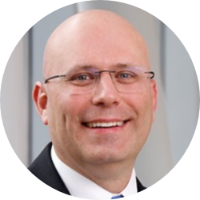 |
Wesley H. Self, MD
Max Harry Weil Honorary Lecture
Senior Vice President for Clinical Research
Director, Vanderbilt Institute for Clinical and Translational Research
Professor of Emergency Medicine
Vanderbilt Health
Nashville, Tennessee, USA
|
A continuum exists when it comes to randomized controlled trials, with explanatory trials on one end and pragmatic trials on the other end. Explanatory trials explore whether a treatment is efficacious in ideal circumstances whereas pragmatic trials focus on effectiveness in everyday situations.
2
Dr. Self understands that critical care rarely involves ideal circumstances. That is why Vanderbilt Health launched a structured effort to facilitate pragmatic trials in critically ill patients.
"During clinical care, practitioners are repeatedly faced with making decisions about which therapies to use," Dr. Self said. "Frequently, information about the relative safety and effectiveness of available alternatives is lacking. This motivated us to develop research studies that would answer important everyday questions for those on the front lines of clinical care."
Vanderbilt Health identified some of the most important questions clinicians face in the ICU and emergency department that could be answered with simple clinical trials. In the past 10 years, the team has addressed a range of questions, including:
- What is the optimal approach to intubating critically ill patients?
- What are the best antibiotics for initial empirical therapy for sepsis?
- What oxygenation target should be used for mechanically ventilated patients?
- What is the best crystalloid for resuscitation of critically ill patients?
Each question was inspired by clinicians who wanted more information to help them make better informed decisions.
The Vanderbilt Health team designed trials with eligibility and randomization embedded into its electronic health record (EHR) system. On-duty clinicians were able to deliver the interventions, and outcomes could be easily collected from the EHR.
"This creates an opportunity to perform very large and efficient clinical trials that take advantage of both 'big data' methods and the power of randomization," Dr. Self said. "By embedding simple clinical trials into ongoing care, we have been able to conduct trials with large sample sizes that definitively answer important questions and are immediately applicable to clinical care."
In presenting results and observations from Vanderbilt Health's pragmatic trials, Dr. Self will demonstrate how clinicians have the power to improve care. By highlighting keys to successful pragmatic trials, his goal is for Congress attendees to see and be inspired by how they can transform care within their own health systems.
"At its core, a learning health system is a local activity," he said. "A key is understanding what the important issues are locally and then designing the research to answer those questions. Designing research around issues that are important to clinicians empowers the system to generate and answer its own research questions. Learning healthcare systems that routinely conduct pragmatic trials can and should be built."
The Max Harry Weil Honorary Lecture is named in honor of Max Harry Weil, MD, PhD, MCCM, the founder and first president of SCCM.
Bedside Is the Laboratory: Turning Clinical Curiosity into Research That Changes Care
Monday, March 15, 2027 | 1:30 p.m. – 2:15 p.m..
 |
Anne W. Alexandrov, PhD, AGACNP-BC, CNS, ANVP-BC, FAAN
Professor of Nursing and Neurology
University of Tennessee Health Science Center
Memphis, Tennessee, United States
|
In the second half of the 20th century, physicians who also thrived as researchers and teachers were the medical field's triple threat—they provided thoughtful care, performed groundbreaking research, and shared lessons with aspiring medical professionals.
3 Nurses, however, were largely not lauded in the same way, according to Dr. Alexandrov.
"The medical profession recognized early on that those teaching medicine need to practice medicine, and that active practitioners are best positioned to generate the most important and relevant research questions," Dr. Alexandrov said. "Nursing took more of a dichotomized or trichotomized approach with models that separated researchers from practitioners and, in some cases, separated teachers from practitioners and researchers."
That separation is changing, Dr. Alexandrov said, but not quickly enough. She believes a myth still exists that meaningful clinical research belongs only to professional researchers, and her mission is to squash that belief.
"Practice is essential to research. It's impossible to separate the two and ensure completion of clinically relevant, important contributions," she said. "Practitioners use key observational findings to build the science needed to support hypothesis testing in clinical trials. Separating practice from research places researchers in an impotent position whereby they are fully dependent on others to inform them of what to study and how best to insert themselves and their work into the clinical setting."
Drawing on a career that spans critical care and emergency practice, stroke research, multicenter clinical trials, and implementation of evidence into practice, Dr. Alexandrov will demonstrate how clinicians can transform bedside observations into answerable questions and ultimately into evidence that improves patient care.
Dr. Alexandrov developed and continues to lead the world's first acute stroke postgraduate fellowship training program for advanced practice providers (APP). This program, called the Neurovascular Education and Training in Acute Stroke Management and Reperfusion Therapies (NET SMART) Program, helped train and graduate more than 150 board eligible advanced neurovascular practitioner APPs.
"Practice opens your eyes to questions, such as 'What's going on here?' or 'I wonder what would happen if I did X?' " she said. "One thing you learn early on is that if you want something done, you'd best be prepared to do it yourself. As a clinician, you can jump right in and enroll patients, deliver interventions, collect data on results and impact, and understand the larger implications of your work. I love that about clinically based nursing research. There's nothing more fun or challenging!"
Medicine, Media, and My Journey: The Impact of "The Pitt" Medical Drama Series
Tuesday, March 16, 2027 | 8:00 a.m. – 8:45 a.m.
 |
Sylvia Owusu-Ansah MD, MPH, FAAP
Ake Grenvik Honorary Lecture
Associate Professor of Pediatrics and Emergency Medicine
Associate Vice Chair of Diversity, Equity, and Inclusion, Department of Pediatrics
University of Pittsburgh School of Medicine
EMS Medical Director
UPMC Children's Hospital of Pittsburgh
Pittsburgh, Pennsylvania, USA
|
When the medical drama
The Pitt won the Emmy Award for outstanding drama series in 2025, Dr. Owusu-Ansah felt as if she had earned part of the recognition as one of the medical advisors for the show, which chronicles life in a fictional trauma center in Pittsburgh.
“The depiction, hour by hour, highlights the volume and frequency of patients we handle in the emergency department,” said Dr. Owusu-Ansah. “The monitor readings reflect what the patients are experiencing, and the procedures are accurate. It also does a phenomenal job addressing social issues and factors related to both patients and clinicians alike.”
The Pitt won 11 Emmys for its first two seasons, including back-to-back outstanding drama series victories.
The show is the latest in a long list of successful television medical dramas. Dr. Owusu-Ansah said she is not surprised by the genre’s popularity. “Health touches everyone’s life, and healthcare touches everyone’s life,” she said. “We all get sick and experience moments of vulnerability when we depend on others’ expertise to help us.”
Dr. Owusu-Ansah knows that firsthand, both as a critical care provider and as a breast cancer survivor.
The Pitt has been well regarded by healthcare professionals because of its accuracy and attention to detail, according to Dr. Owusu-Ansah. Her session will examine the impact of The Pitt. She will also share her own story of growing up in Namibia, lending her voice to the fight against healthcare disparities, and becoming a proponent of teaching student athletes how to perform CPR.
“The media is one of the most powerful channels for sharing our expertise about medicine,” Dr. Owusu-Ansah said. “People respect us as physicians, and we owe it to the public, our patients, our communities, and our families to engage on these platforms and share accurate information about medicine and health, thereby preventing misinformation from taking hold.”
The Ake Grenvik Honorary Lecture is named in honor of Ake Grenvik, MD, PhD, MCCM, the first SCCM membership committee chair and the seventh SCCM president.
Crisis-Level Shortages and Ethical Triage: From Playbooks to Daily Practice
Tuesday, March 16, 2027 | 1:30 p.m. – 2:15 p.m.
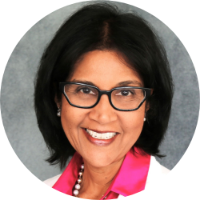 |
Asha Devereaux, MD, MPH
William Shoemaker Honorary Lecture
Pulmonary, Critical Care Medicine, and Internal Medicine
Sharp HealthCare
National Academies Standing Committee Member for Emerging Infectious Diseases and Health Threats
Coronado, California, USA
|
Dr. Devereaux spent 11 years in the U.S. Navy, achieving the rank of Commander. As a military-trained clinician, she is experienced providing care in uncommon settings, including a ship, tent, and gymnasium, and has responded to natural disasters with the Medical Reserve Corps and the National Disaster Medical System, offering care to fire victims and hurricane survivors alike.
The key is preparation.
"There are many emotional responses experienced," said Dr. Devereaux. "You are in charge of everyone and figuring out how to deliver care with limited resources. You have to keep yourself calm so that it helps others remain focused on the mission."
Dr. Devereaux will walk Congress attendees through taking national Crisis Standards of Care frameworks and translating them into field-ready ICU playbooks. The goal is to help participants understand how to lead their ICUs through a disaster or sustained surge and pivot from "best for one" care to "best for many" support without sacrificing fairness, transparency, or team integrity.
"When a patient is in front of you, they are your focus," she said. "You will try to deliver the best care you can to all you see with whatever resources and personnel are present. It is important to have a way to communicate externally to your situation that you need help, to evacuate, or to transfer patients in order to balance the load."
An important yet easily overlooked step in preparing for disaster care is thinking through how to maintain a list of issues and challenges since you will be inundated. While keeping notes on your phone can be useful, it can be hard to keep your phone charged amid disasters when power can be limited. That's why Dr. Deveraux often turns to a clipboard, paper, and pen to keep notes.
Although patients are the primary focus during a disaster, Dr. Devereaux emphasized that medical professionals should not forget to also prioritize time and care for themselves.
"It is unfortunately easy to forget yourself and your peers as you are responding to many issues requiring your attention," she said. "Designate a peer to cover your leadership role, and make sure people know where you are and always communicate redundantly."
Dr. Devereaux believes every member of a care team should envision themselves as the potential leader of their team in the event of a disaster. In doing so, it is important to think through potential scenarios related to that role. How will you connect with others on your team or on other interdisciplinary teams? How do you develop your situational awareness? How do you keep your supply chain intact?
When these types of questions are asked before an emergency occurs, it makes leading teams through an emergency far easier.
"When you prepare for disasters or rare situations, your ability to pivot and respond will feel normal, and your ICU, team, and institution will become resilient," Dr. Devereaux said. "We don’t know what the next disaster situation will be. Knowing what to do, how to communicate, and knowing your medical supply chain will help you care for your patients."
The William C. Shoemaker Honorary Lecture is named in honor of William C. Shoemaker, MD, FACS, MCCM, a founding member of SCCM and its third president. Dr. Shoemaker was also the founding editor of Critical Care Medicine
.
Register for the 2027 Critical Care Congress to attend these sessions and more!
References:
- Tisherman SA, Alam HB, Rhee PM, et al. Development of the emergency preservation and resuscitation for cardiac arrest from trauma clinical trial. J Trauma Acute Care Surg. 2017 Nov;83(5):803-809.
- Tosh G, Soares-Weiser K, Adams CE. Pragmatic vs explanatory trials: the Pragmascope tool to help measure differences in protocols of mental health randomized controlled trials. Dialogues Clin Neurosci. 2011;13(2):209-215.
- Alpert JS, Coles R. Careers in academic medicine. Triple threat or double fake. Arch Intern Med. 1988;148(9):1906-1907.