SCCM Supports Fundamentals Training in the West Bank
01/06/2026
The Society of Critical Care Medicine (SCCM) is strengthening critical care training for healthcare professionals in the West Bank by training instructors for a range of SCCM courses.
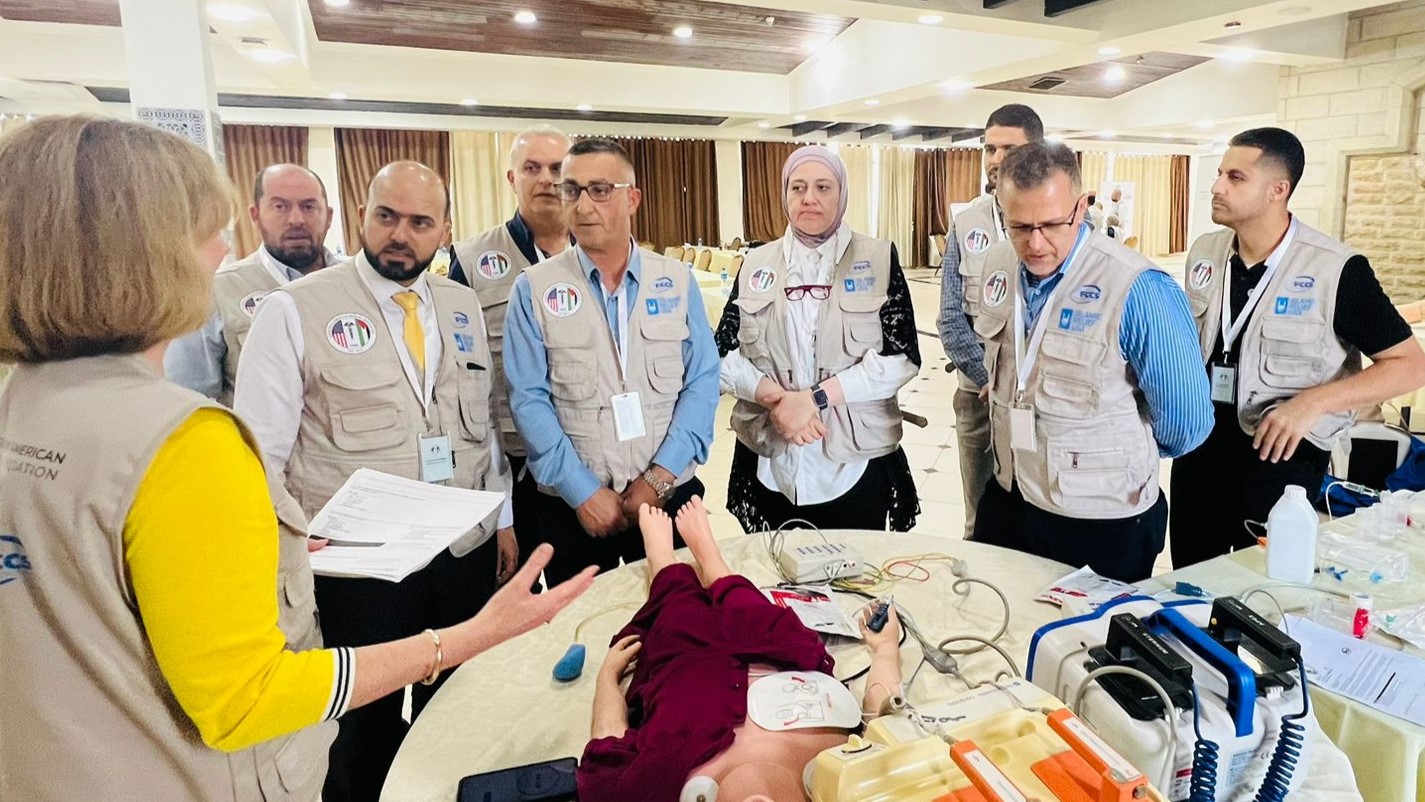
In October 2025, a team of U.S.-based clinicians traveled to the West Bank to hold Fundamental Critical Care Support (FCCS) courses, which teach clinicians how to manage critically ill and injured patients for the first 24 hours or until appropriate critical care consultation can be arranged.
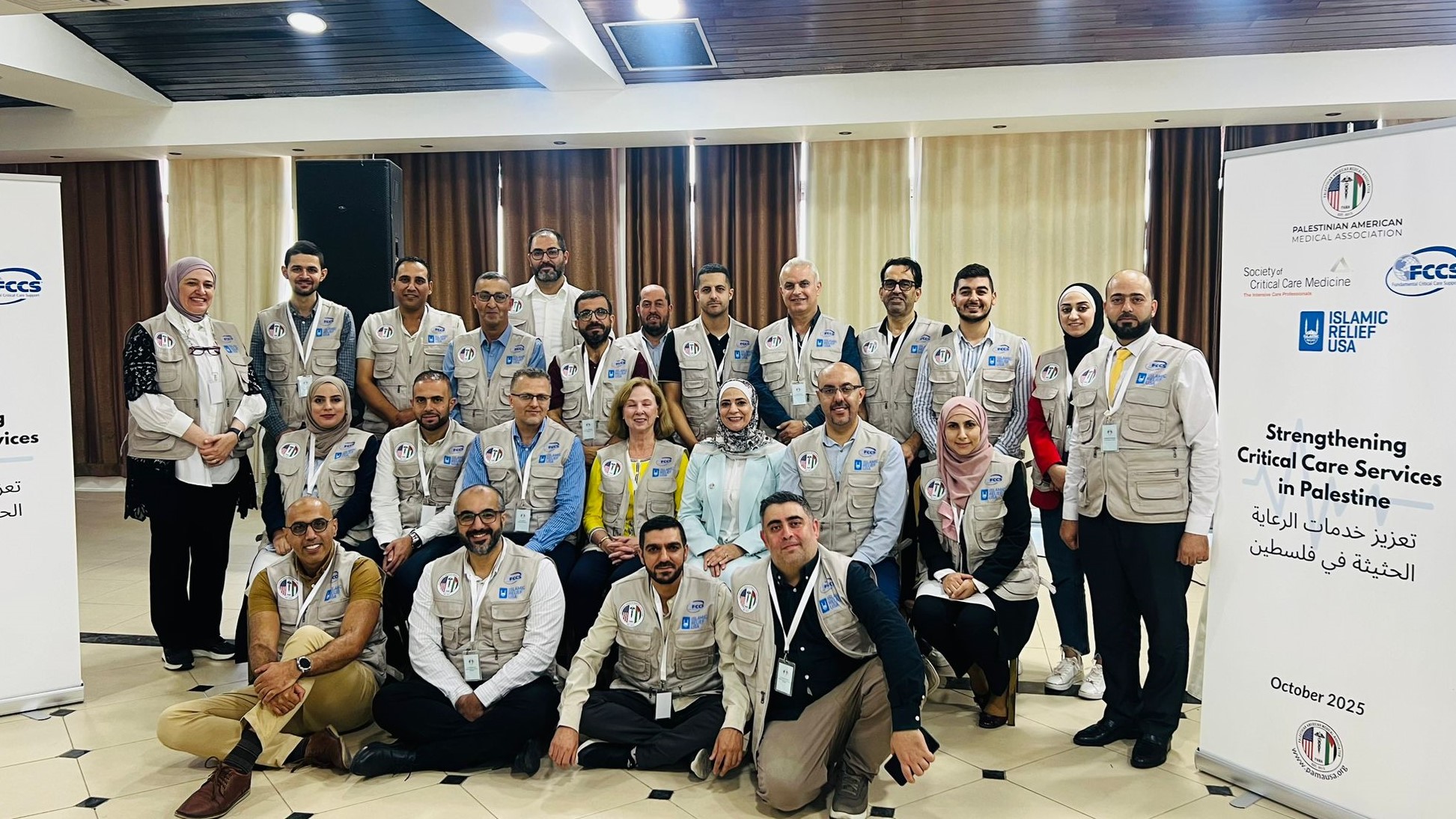
Twenty-two ICU clinicians in the West Bank completed online training to become FCCS course instructors. On site, they completed a one-day instruction in interactive skill stations. Then the new instructors, with support from the U.S. SCCM team, spent the next four days teaching two courses FCCS courses. The courses were divided up into two days for physicians, followed by two days for nurses. Courses included flexible learning formats and interactive skill stations to create a comprehensive learning experience. Overall, more than 70 clinicians received FCCS training.
In the West Bank, clinicians often encounter critically ill patients in varied settings, such as the emergency department, ICU, or outside the hospital, said Majdi Hamarshi, MD, FCCM, who was the course director on the trip. Dr. Hamarshi is a critical care specialist in the Kansas City area and chair of the board of directors of the Palestinian American Medical Association (PAMA). He is originally from the West Bank.
“In the U.S., we have 24/7 ICU availability, but there, the critical care specialists are not available, to start with. And the ICUs may be full, and the injuries might be outside the hospital,” he said. “So, they need this training and need to know how to manage critically ill patients in the first 24 hours.”
Dr. Hamarshi’s partner on the trip was course consultant Janice L. Zimmerman, MD, MACP, FRCP, MCCM. Dr. Zimmerman, an intensivist and critical care consultant in Houston, Texas, has taught FCCS courses all over the world for 30 years. “The first person to have contact with a sick person is not an intensivist; it’s a family practitioner, emergency physician, or nurse in a clinic or hospital,” she said. “The premise of FCCS is that the care given in that first 24 hours is important in changing the outcome for that patient.”
The train-the-trainers aspect is an important part of FCCS. “With this training, we want to not only give the course, we want to train the trainer and graduate not only instructors, but directors who can give the course,” Dr. Hamarshi said. “That local team will be independent, able to teach hundreds of West Bank and Gaza healthcare workers in the months and years to come. That was our vision.”
The FCCS training fees were funded by SCCM’s Disaster Relief donation fund. Other course costs were covered by PAMA through a donation from Islamic Relief USA.
SCCM has set aside 350 spots for learners to take part in future hosted training in the West Bank. A second trip is planned for January to train some of the new instructors to become course directors, allowing them to hold future courses without the need for U.S.-based course directors. SCCM plans to expand the training to other FCCS courses, including FCCS: Pediatrics and FCCS: Obstetrics, based on regional needs.
Dr. Hamarshi said West Bank clinicians had already known about SCCM and the FCCS courses, but costs and travel challenges precluded them from traveling to course sites outside the West Bank. “They never dreamed they would have this course. They were thinking, ‘We will need to travel to an SCCM conference. We need to go to the U.S. We need to get a visa.’ Having the course come to their cities and their ICUs, that meant a lot to them.”