What does it mean to be a Master of Critical Care Medicine? E. Wesley “Wes” Ely, MD, MPH, MCCM, told the story of his career at the 2026 Critical Care Congress.
What does it mean to be a Master of Critical Care Medicine (MCCM)?
The American College of Critical Care Medicine (ACCM) MCCM designation is ACCM’s most prestigious honor. It is a distinction reserved for those who have achieved national and international prominence in critical care through personal character, leadership, clinical eminence, outstanding contributions to research and education, and years of exemplary service. It is, by design, a recognition not only of what someone has accomplished, but also of who they have become along the way.
At the Society of Critical Care Medicine’s (SCCM) 2026 Critical Care Congress, the ACCM Board of Regents introduced the Master’s Journey, a reimagined town hall session that invites MCCM recipients to do something rarely asked of distinguished clinical experts, educators, and researchers: set aside the data slides and tell the story of a career as it was actually lived. This story includes the failures, mentors, pivots, and patients who changed everything.
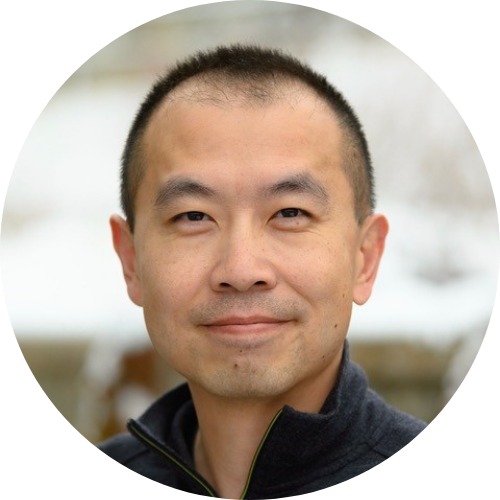
The 2026 inaugural Master’s speaker was E. Wesley “Wes” Ely, MD, MPH, MCCM, the Grant W. Liddle Chair of Medicine at the Vanderbilt University Medical Center in Nashville, Tennessee, USA; founder and codirector of the Critical Illness, Brain Dysfunction, and Survivorship (CIBS) Center; and author of the award-winning narrative nonfiction book
Every Deep-Drawn Breath, which is a blend of science, true patient stories, and personal reflection whose proceeds are designated to a fund to help intensive care unit (ICU) survivors and their families.
1 Through a question-and-answer format, the session covered the milestones across Dr. Ely’s three-decade career, tracing the journey that redefined our understanding of the “brain bone” in the ICU.
Early Years and Lessons From the Fields
During the session, Dr. Ely reflected on early experiences that drove him toward a life in medicine. He was raised by a single mom who was an English teacher with an annual household income of $17,000. Nightly readings with his mom nurtured Dr. Ely’s love for narrative. He described how working in the produce fields in Louisiana gave him a ground-level view of the human condition and the struggles of people often overlooked by society. Those childhood experiences were reinforced during his medical training at Charity Hospital in New Orleans, where caring for poor, underserved, and chronically ill patients deepened his commitment to seeing the whole person rather than just someone’s disease.
Evolution of the Physician Scientist
After obtaining his MD and MPH degrees at Tulane University, Dr. Ely then received training as an internist and subspecialist in pulmonary and critical care at Wake Forest University and lung transplantation at Barnes Jewish Washington University. As he emerged from his training in the mid-1990s, the prevailing ICU culture relied heavily on deep sedation and prolonged ventilator support. Despite initial resistance from the medical community, he published a landmark randomized controlled study on spontaneous breathing trials in the
New England Journal of Medicine, which catalyzed a movement from mechanical ventilation toward early liberation using respiratory therapy-driven protocols.
2
Dr. Ely described his education and training as building a toolbox that would eventually allow him to tackle broader systemic issues in critical care. A central theme was his mentorship philosophy, which he borrowed from Walter Bond’s book
Swim!: How a Shark, a Suckerfish, and a Parasite Teach You Leadership, Mentoring, and Next Level Success.
3 By attaching himself to experienced leaders and learning everything they knew, he was able to navigate the complex world of academic medicine and research and maintain his true passion. Dr. Ely described the mentor-mentee relationship as a sacred space that is built on the active desire of the mentee for constructive criticism (ie, love of “red-ink” corrections), mutual respect, and a shared dedication to answering questions that matter. He fondly recalled his mentor, Gordon Bernard, MD, from whom he learned a sophisticated approach to clinical trial design. These early bonds not only taught him the craft of rigorous science, but also helped him stay on course during a period when the field was largely indifferent to the work that would eventually define his career.
The Pivot: From “Lung Bone to Brain Bone”
The pivot in Dr. Ely’s career was what he calls the move from the “lung bone to the brain bone.” Although delirium was ubiquitous in the ICU, it was frequently dismissed by clinicians as ICU psychosis, an expected side effect of critical illness. During those early years, nobody was talking about delirium. Dr. Ely’s research proposals about delirium were repeatedly rejected, funding was denied, and journal editors were skeptical about the concept. His mentors kept him on track and encouraged him to follow his passion and to measure what others did not see. Dr. Ely and his team recognized that what is invisible cannot be treated; this led to the development of the Confusion Assessment Method for the Intensive Care Unit (CAM-ICU) and contributed to the validation of the Richmond Agitation-Sedation Scale, giving the multiprofessional team a shared, objective language.
The impact of his work was global: CAM-ICU was published in the
Journal of the American Medical Association in 2001
4 and has since been translated into more than 35 languages and implemented in ICUs around the world to monitor delirium in ICU patients. Dr. Ely and his team demonstrated for the first time that delirium independently predicted death, a finding that opened the gateway for new ideas and a generation of clinical trials.
Implementing Change and Facing Humility
The true value of research lies in its application at the bedside. That conviction culminated in the ICU Liberation Bundle (A-F) and the ICU Liberation Collaborative supported by the Gordon and Betty Moore Foundation through SCCM. This initiative enrolled more than 15,000 patients across approximately 70 hospitals, changing sedation and delirium management in the ICU through an iterative process that incorporates interprofessional teams to break down silos in patient care.
5 Throughout this process, Dr. Ely emphasized the fundamental need to embrace small tests of change through Plan-Do-Study-Act cycles, invoking the principle of getting the “right people on the bus,” and building partnerships across disciplines toward a shared purpose of reducing human suffering.
The Master’s Journey is as much about the humbling moments as the triumphs. Dr. Ely spoke about recognizing that standards of care and long-held convictions are sometimes not truthful or accurate. He described the 2018 MIND-USA trial,
6 which debunked 40 years of reflexive antipsychotic use in the ICU for treatment of delirium as a lesson in scientific humility. He acknowledged “getting something wrong” during the COVID-19 pandemic, assuming that long COVID was simply post-intensive care syndrome (PICS) in COVID survivors. That realization led him to new avenues of research; he served on the committee that defined long COVID
7 and now leads the REVERSE-Long Covid trial funded by the National Institutes of Health.
8
A Legacy of Mercy and Mentorship
Perhaps one of the most powerful threads of the session was when Dr. Ely recounted a period of discovery that ran from the 2013 BRAIN-ICU study through today.
9 BRAIN-ICU study findings provided evidence for the cognitive devastation within PICS, showing that a striking proportion of ICU survivors left the hospital with cognitive impairment comparable in severity to traumatic brain injury or early Alzheimer dementia. What followed after this period was not just a research program but a movement.
Dr. Ely spoke about providing mercy in research, a conviction that studying these outcomes was itself an act of care for the patients who had been harmed by the therapies we used to save them. He founded the CIBS Center to serve patients who are critically ill or recovering from critical illness, particularly those who have suffered from delirium and face long-term cognitive impairment. The CIBS Center became a training ground for the next generation of investigators; numerous centers across the country have built PICS clinics and survivorship programs inspired by the acknowledgment that our job is not over when a patient is discharged from the ICU. In fact, in many ways, it should just be beginning.
While Dr. Ely may have started his career as a suckerfish, he has spent the latter half of it being one of the many great mentors in our field whom others attach to, while ensuring that the next generation of investigators can swim on their own. He spoke with conviction about his belief that science alone will never be enough and that humanism must walk alongside every discovery. Dr. Ely described himself as driven by a duty to remain with patients through the chaos of critical illness and into recovery, to find healing even in suffering. This philosophy animates his team’s survivorship programs.
A Roadmap for the Next Generation
We were deeply honored and inspired by Dr. Ely's remarkable human-science journey. Attendees from all career stages were actively engaged, and the conversation continued long after the session was over. Dr. Ely’s narrative serves as a powerful reminder that the MCCM designation is, by design, a recognition of not only what someone has accomplished, but also of who they have become along the way. For aspiring investigators, Dr. Ely offered a distilled framework for meaningful research: study what you encounter in abundance, pursue questions where either answer matters, and focus on problems common enough to change practice at scale. These principles reflect a career built not on chasing prestige but on following a genuine clinical need. He reminded the audience that the future belongs to the discontented: new ideas and future discoveries await those with the courage to question the status quo and pursue the next generation of studies with rigor and purpose.
The Master’s Journey session will return next year at the 2027 Critical Care Congress to provide an opportunity to hear inspiring stories that have made each Master who they are today.
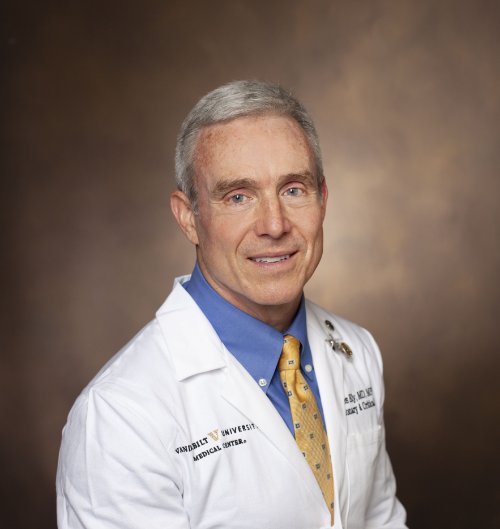
Dr. E. Wesley “Wes” Ely, MD, MPH, MCCM
|
References
- Ely W. Every Deep-Drawn Breath: A Critical Care Doctor on Healing, Recovery, and Transforming Medicine in the ICU. Simon & Schuster; 2021.
- Ely EW, Baker AM, Dunagan DP, et al. Effect on the Duration of Mechanical Ventilation of Identifying Patients Capable of Breathing Spontaneously. N Engl J Med. 1996;335(25):1864-1869.
- Bond W. Swim!: How a Shark, a Suckerfish, and a Parasite Teach You Leadership, Mentoring, and Next Level Success. John Wiley & Sons; 2019.
- Ely EW, Inouye SK, Bernard GR, et al. Delirium in mechanically ventilated patients: validity and reliability of the confusion assessment method for the intensive care unit (CAM-ICU). JAMA. 2001;286(21):2703-2710.
- Pun BT, Balas MC, Barnes-Daly MA, et al. Caring for Critically Ill Patients with the ABCDEF Bundle: Results of the ICU Liberation Collaborative in Over 15,000 Adults. Crit Care Med. 2019;47(1):3-14.
- Girard TD, Exline MC, Carson SS, et al. Haloperidol and ziprasidone for treatment of delirium in critical illness. New Engl J Med. 2018;379(18):2506-2516.
- Ely EW, Brown LM, Fineberg HV; for the National Academies of Sciences, Engineering, and Medicine Committee on Examining the Working Definition for Long Covid. Long Covid Defined. N Engl J Med. 2024;391(18)1746-1753.
- Reverse LC. People living with long COVID are looking for answers. www.reversinglongcovid.org
- Pandharipande PP, Girard TD, Jackson JC, et al; for the BRAIN-ICU Study Investigators. Long-term cognitive impairment after critical illness. New Engl J Med. 2013;369(14):1306-1316.