





Guidelines for the Administration of Neuromuscular Blockade in Adults With ARDS
Citation: Erstad BL, Sarwal A, et al. Society of Critical Care Medicine guidelines for the administration of neuromuscular blockade in adults with acute respiratory distress syndrome. Crit Care Med. 2026 Mar;54(3):p 634-643.
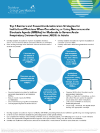
RATIONALE: Neuromuscular blocking agents (NMBAs) show potential benefits on mortality and other complications of acute respiratory distress syndrome (ARDS) in adult patients. Evidence-based decisions and processes ensure appropriate use of neuromuscular blockade in adult patients with ARDS.
OBJECTIVES: The objective of these guidelines was to develop evidence-based recommendations for the administration of NMBAs in critically ill adult patients with ARDS.
DESIGN: The American College of Critical Care Medicine Board convened a 21-member multidisciplinary panel of experts in critical care medicine, nursing, respiratory therapy, pharmacology, surgery, neurology, and anesthesiology. The panel included two expert methodologists specialized in developing evidence-based recommendations in alignment with the Grading of Recommendations, Assessment, Development, and Evaluation (GRADE) methodology. Conflict-of-interest policies were strictly followed during all phases of guidelines development including task force selection and voting.
METHODS: The panel members identified and formulated five Population, Intervention, Comparison, and Outcome questions. We conducted a systematic review for each question to identify the best available evidence, statistically analyzed the evidence, and assessed the certainty of the evidence using the GRADE methodology. We used the GRADE evidence-to-decision framework to formulate the recommendations.
RESULTS: The panel generated two conditional recommendations. One recommendation is to use NMBAs in adults with ARDS with PaO2/FIO2 less than 150. For the other recommendations, there was equipoise in the recommendation for and against using titratable vs. fixed-dose NMBA dosing, a monitoring-based strategy for assessing depth of sedation and analgesia in adults with ARDS before initiating or while receiving neuromuscular blockade, and administration of NMBAs for patients who are proned, due to overall lack of evidence in critically ill patients and due to considerations of patient safety and experience concerns.
CONCLUSIONS: These guidelines provide additional perspectives on the use of NMBA in patients with ARDS, recognizing that institutional and patient-specific considerations must help to guide the decision-making process.
Guideline Type: Clinical
Related Resources:
Executive Summary: Society of Critical Care Medicine Guidelines for the Administration of Neuromuscular Blockade in Adults With Acute Respiratory Distress Syndrome
Strength:
Identifier:
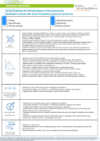
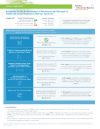
We suggest using NMBAs over not using NMBAs in adults with ARDS with PaO2/FIO2 less than 150 who are persistently hypoxemic and/or not achieving mechanical ventilation targets on sedation.
Certainty of evidence: Low
We suggest using either a fixed-dose strategy without monitoring depth of neuromuscular blockade, or a titration-based strategy by monitoring depth of neuromuscular blockade for adults with ARDS.
Certainty of evidence: Very low
We suggest using either a scale-based evaluation or nonscale-based evaluation for depth of analgesia and sedation before initiating NMBA for adult patients with ARDS.
Certainty of evidence: Very Low
We suggest using either a monitoring-based strategy or no monitoring of depth of analgesia and sedation in adults with ARDS who are receiving NMBAs.
Certainty of evidence: Very low
We suggest either administering neuromuscular blockade or not administering neuromuscular blockade in adult patients who are proned for ARDS.
Certainty of evidence: Very low