07/16/2026


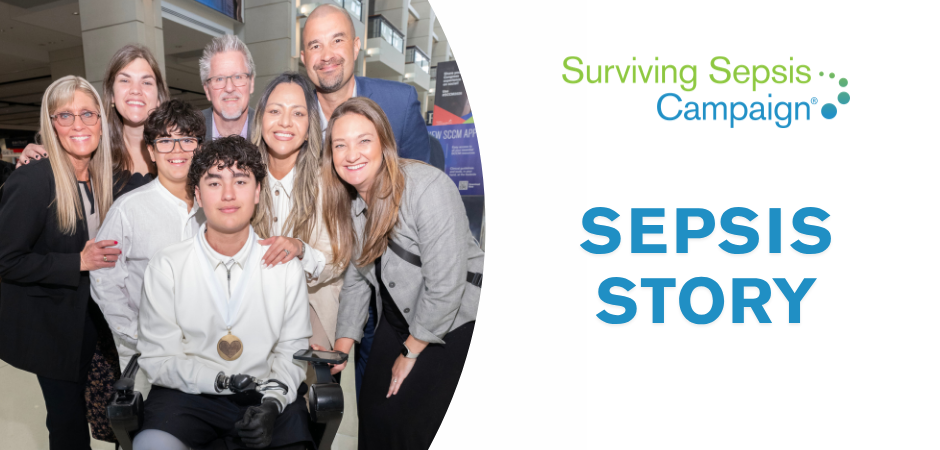
2026 ICU Heroes Award recipients Mathias Uribe, his family, and his care team share their story.
In June 2023, Mathias Uribe’s health crisis began with symptoms that were first thought to be influenza. He had several symptoms, including a full-body rash, and was evaluated twice at his pediatrician’s office within three days. He had not been tested for Streptococcus, and scarlet fever had not yet been diagnosed.
When Mathias continued to get worse, his father, Edgar, called the pediatrician’s office again. The next day, Edgar took Mathias to the emergency department at their local hospital. Mathias collapsed with shock and cardiac arrest. He was diagnosed with group A Streptococcus sepsis and pneumonia and transported by helicopter to a hospital with a pediatric intensive care unit.
Mathias needed extracorporeal membrane oxygenation (ECMO), a form of advanced life support, but ECMO was not available at that hospital. He was transported again, this time to Monroe Carell Jr. Children’s Hospital at Vanderbilt University Medical Center in Nashville, Tennessee. Before the transfer, physicians warned his family that Mathias had only a 1% chance of survival. The infection had caused severe tissue damage to all four of his extremities.
At Vanderbilt, Mathias was placed on ECMO. He spent 12 days on ECMO and five months in the PICU. His recovery required four amputations, followed by another five months in a rehabilitation hospital in Chicago.
Turning Point and Impact
Mathias’s care journey was marked by extraordinary multidisciplinary care. His medical team worked to help him survive the acute infection and critical illness, while rehabilitation, psychology, psychiatry, child life, spiritual care, and social work teams helped support his physical and emotional recovery.
Kristina Ann Betters, MD, FAAP, FCCM, medical director at Monroe Carell Jr. Children’s Hospital at Vanderbilt, later recognized Mathias’s resilience through the Society of Critical Care Medicine’s ICU Hero Award. “His physical recovery is nothing short of amazing, but his ability to recover from the psychological trauma of his injury is astounding,” Dr. Betters said.
Support and Resilience
Mathias’s family and care team played an essential role in helping him keep going. Today, Mathias is 17 and learning to live with prosthetics. He uses an adaptive controller to play video games with friends and adaptive controls in his car.
“I feel a lot of freedom now that I can drive,” Mathias said.
He is also thinking about college. Mathias had always wanted to be an engineer, and his experience has inspired an interest in biomedical engineering.
“This experience really opened my eyes,” Mathias said. “It would be so fulfilling to help people like me and develop things that would facilitate great lives for people for whom, right now, it seems like their life’s over. I hope I can change that.”
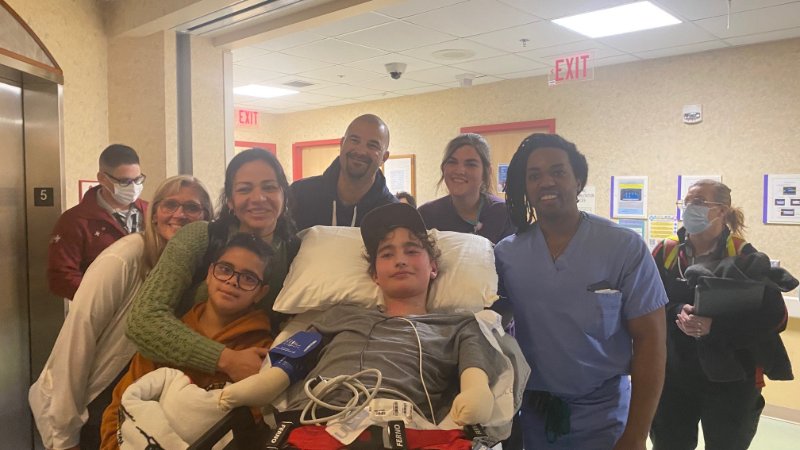
Mathias Uribe, his family, and members of his care team at Monroe Carell Jr. Children’s Hospital at Vanderbilt.
When Mathias continued to get worse, his father, Edgar, called the pediatrician’s office again. The next day, Edgar took Mathias to the emergency department at their local hospital. Mathias collapsed with shock and cardiac arrest. He was diagnosed with group A Streptococcus sepsis and pneumonia and transported by helicopter to a hospital with a pediatric intensive care unit.
Mathias needed extracorporeal membrane oxygenation (ECMO), a form of advanced life support, but ECMO was not available at that hospital. He was transported again, this time to Monroe Carell Jr. Children’s Hospital at Vanderbilt University Medical Center in Nashville, Tennessee. Before the transfer, physicians warned his family that Mathias had only a 1% chance of survival. The infection had caused severe tissue damage to all four of his extremities.
At Vanderbilt, Mathias was placed on ECMO. He spent 12 days on ECMO and five months in the PICU. His recovery required four amputations, followed by another five months in a rehabilitation hospital in Chicago.
Turning Point and Impact
Mathias’s care journey was marked by extraordinary multidisciplinary care. His medical team worked to help him survive the acute infection and critical illness, while rehabilitation, psychology, psychiatry, child life, spiritual care, and social work teams helped support his physical and emotional recovery.
Kristina Ann Betters, MD, FAAP, FCCM, medical director at Monroe Carell Jr. Children’s Hospital at Vanderbilt, later recognized Mathias’s resilience through the Society of Critical Care Medicine’s ICU Hero Award. “His physical recovery is nothing short of amazing, but his ability to recover from the psychological trauma of his injury is astounding,” Dr. Betters said.
Support and Resilience
Mathias’s family and care team played an essential role in helping him keep going. Today, Mathias is 17 and learning to live with prosthetics. He uses an adaptive controller to play video games with friends and adaptive controls in his car.
“I feel a lot of freedom now that I can drive,” Mathias said.
He is also thinking about college. Mathias had always wanted to be an engineer, and his experience has inspired an interest in biomedical engineering.
“This experience really opened my eyes,” Mathias said. “It would be so fulfilling to help people like me and develop things that would facilitate great lives for people for whom, right now, it seems like their life’s over. I hope I can change that.”
Mathias Uribe, his family, and members of his care team at Monroe Carell Jr. Children’s Hospital at Vanderbilt.
Tags: